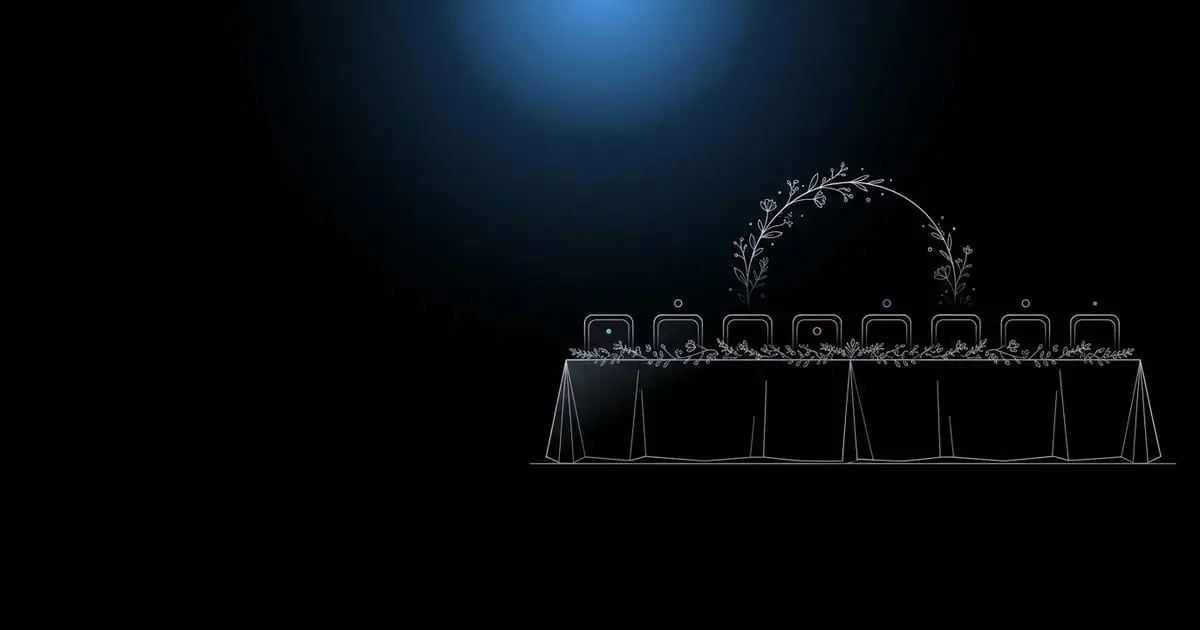
The head table is the long table at the front of the reception where the couple sits with their wedding party. It faces the guests, everyone sits on one side, and it is usually the first table the room sees. Getting it right is mostly about who sits next to whom and how many feet of table you need. You can lay it out with the family tables around it in the wedding seating chart generator, which has a head table option built in.
The traditional order
Picture the table from the guests’ side. The couple sits in the center. Traditionally the bride is on the groom’s right, so she appears on the left in photos.
From the couple outward, the classic pattern alternates men and women:
| Position (from center out) | Bride’s side | Groom’s side |
|---|---|---|
| 1 | Bride | Groom |
| 2 | Best man | Maid of honor |
| 3 | Groomsman | Bridesmaid |
| 4 | Bridesmaid | Groomsman |
The best man sitting next to the bride and the maid of honor next to the groom looks odd to some couples. The common modern version seats each person beside their own closest friend: maid of honor next to the bride, best man next to the groom, then the rest of each side going out toward the ends. Both are correct. Pick the one that gives the best conversation, because these people sit together for two or three hours.
Who else can sit there
- Partners of the wedding party. Adding dates makes the table twice as long, but it stops partners sitting alone among strangers. If the table would get too long, seat the partners at a table right in front.
- Parents. Optional. A small wedding party plus both sets of parents can work well. With a large party, parents get their own table.
- Children in the wedding party. Flower girls and ring bearers usually sit with their parents, not at the head table.
Where the parents go instead
The tables closest to the head table go to family. A common setup is one table for each side’s parents, grandparents and siblings who are not in the wedding party. If parents are divorced, give each parent their own table at an equal distance from the couple. Nobody then feels they got the worse seat. In the seating tool you can add a keep-apart rule for any two people who should not share a table, and it will respect it every time you auto-arrange.
How long the head table needs to be
Head tables seat people on one side only. A standard 8 ft banquet table seats 4 people comfortably that way, and a 6 ft table seats 3.
| People at the head table | 8 ft tables | Approx. length |
|---|---|---|
| 2 to 4 | 1 | 8 ft |
| 6 to 8 | 2 | 16 ft |
| 10 to 12 | 3 | 24 ft |
| 14 to 16 | 4 | 32 ft |
A head table longer than about 30 ft makes the people at the ends feel cut off. If yours would be longer, try a split layout: the couple in the middle with two shorter tables angled toward the room, or a sweetheart table with the wedding party at a round table in front.
Head table layouts
- Straight line. One row facing the room. Simple and easy to photograph.
- Raised. The table on a riser so guests at the back can see the couple. Ask the venue whether they have staging.
- Curved or angled. Two halves angled inward so the ends can see the couple.
- King’s table. One long table that seats the wedding party and their partners on both sides, usually in the middle of the room rather than at the front. Good for smaller weddings.
Should the head table be on the seating chart?
The guest-facing display usually leaves it off, since everyone at it already knows they are there. The version you send the venue and caterer should include it, with meal choices, so the right plates go to the right seats. In the generator, the head table counts as its own table, so it shows up in the printed meal counts automatically.
Common mistakes
- Forgetting the backs of chairs. Guests at the first round table should not sit with their backs to the couple. Turn those seats or leave them empty.
- No room behind the table. Servers need about 3 ft behind the head table to place plates.
- Mixing up sides. Decide before the rehearsal which side each person sits on and print place cards, so nobody shuffles around at the reception.
Head table setups for common family situations
Every family is different, and the head table is where that shows first. These setups cover the situations couples ask about most:
| Situation | Head table | Nearby tables |
|---|---|---|
| Small wedding party (2 to 4) | Couple, maid of honor, best man, plus their partners | Both sets of parents at one shared family table |
| Large wedding party (10+) | Couple and wedding party only | Partners of the wedding party at one or two tables in front |
| Divorced parents | Couple and wedding party | Each parent at their own family table, equal distance from the couple |
| No wedding party | Couple and both sets of parents | Grandparents and siblings at the first row of tables |
| Couple with children | Couple plus their children | Children’s other relatives at the nearest table |
If you are unsure, sketch two versions in the seating tool and look at them side by side. Set the head table seats to the number of people, press Auto-arrange, then change the number and compare. Undo takes you back to the first version.
Timing the head table on the day
- Entrance: the wedding party usually walks in first and stands behind their chairs; the couple enters last.
- Toasts: a microphone at one end of the head table saves the speakers a walk across the room.
- Service: servers usually plate the head table first, so the couple can eat before visiting tables.
If you would rather skip the long table entirely, compare the options in head table vs sweetheart table, or read what a sweetheart table is. For styling, see head table decor ideas.